
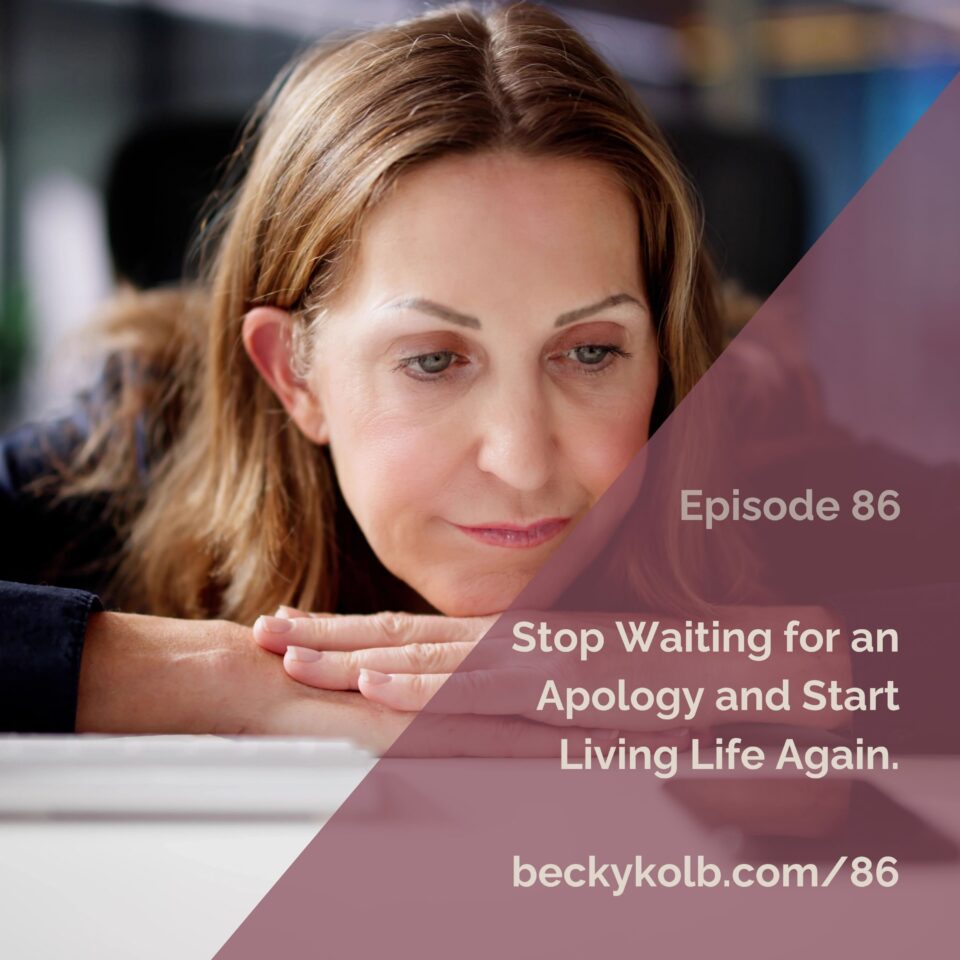
When an estranged son or daughter walks away, do you find praying for an apology or waiting for a text or call? You aren’t sure whether to reach out again or not. And you wonder if the relationship will ever heal and whether you’ll ever even see this child again.
I’ve been there and understand those deepest fears. The ones you refuse to mention to anyone else because it’s too painful.
Let’s sit together for a bit and I’ll share how you can stop waiting for an apology and start living life again.
Stop Waiting for an Apology
Moving on and letting go feels like you’re giving up on your estranged son or daughter, doesn’t it? It felt like that for me. Somehow, I mistakenly felt if I kept obsessing that I could will them back to me. Learn from my mistake. It doesn’t work and in fact it creates more anxiety and stress. Just the opposite of the peace you seek.
Women I coach tell me their priority is to get the relationship back. Forgive, forget, and move on the way it was before. When your son or daughter refuses to speak, you may text only to be ignored. Checking social media is another step to find out what’s happening in their life.
When I say step away from the phone, that’s a metaphor for all the ways that you try to reach out or hope to receive a connection. You feel if only you had a response, an apology, or an explanation, you could move on with your life.
And it just creates a trigger of sadness as you see what you’re missing in the lives of this child and their family.
Are you ready for peace of mind, less rumination and more emotional confidence? Stay with me and I’ll tell you more.
Step Away from Expectations
Naturally, as mothers, we want a healthy relationship with our adult kids. However, we can control only one person and that is ourselves. You can’t control your adult son or daughter and their desire to reconnect.
Of course, you would like an apology for things they may have said or done. You may have even apologized for your part in the estrangement. Forcing them to accept it is not possible. That decision is on them entirely. So, my message is stop waiting for an apology and let’s talk about how to start living again.
On this next question, I’ll ask you to pause the podcast and think about it for a few minutes. If you can’t do that, come back to it and listen again once you’ve pondered what I’m going to ask.
What expectations do you have right now of the estrangement?
- Because you are the mother, do you expect them to have a relationship regardless of what happened?
- Are you expecting an apology?
- Do you expect to see your grandkids because it’s silly to withhold them because your son or daughter refuses to have a relationship?
My instinct tells me there are more expectations you hold deep within your heart. Pause if you can and make a list of those expectations.
When you’ve completed your list, mentally step away from them. Every single one may be a valid expectation. The problem with expectations is that when they are unmet, it creates more stress, anger, resentment, and emotions that rob you of your peace.
Replacing those expectations with what you can control will help you stop waiting for an apology and allow you to move on with living a meaningful life.
Replace Expectations with Things you Control
When you stop waiting by the phone and all the other ways you attempt to connect, you are taking control of your life and emotions. Rather than waiting for your son or daughter to reach out, you can begin to work toward peace of mind, emotional confidence, healthier responses and begin to enjoy life again.
Confront those deepest fears head on. Here are some examples that may resonate with you like they did with me.
What if my child never speaks to me again?
What if they don’t? You can’t control their decisions. I can’t guarantee reconciliation. No one can. How would you deal with life if they chose to never speak again?
Chances are that’s not the case, but you can begin to think about your response. Would you stop living life? Or quit your job? Ditch your responsibilities and friends?
You see, when you let the deepest fears play out, you find that they aren’t as terrible as you feared. Of course, it would be terrible if your child never spoke to you again, but it doesn’t have to end your life. You can finally stop waiting for an apology
You can still have a meaningful and purposeful life no matter what they choose.
What does this say about me as a mother?
Now, that’s important. I felt tremendous guilt and shame. Until I stopped waiting by the phone with my expectations and began to really think about that one.
I was a loving mother and I’m betting you are too. As I contemplated the memories of motherhood, I began to recall sacrifices made, games attended, encouragement when they struggled. And I did make decisions that led to estrangement. I acknowledged those. No parent is perfect. Moms make mistakes. Your son or daughter will too.
No, I was not a bad mother. I was a good mom who had made some bad decisions along the way along with some mistakes. My self-identity began to change, and my confidence grew as I stopped waiting by the phone and began to explore life again.
Moving On is Not Giving Up on the Relationship
When you stop waiting for an apology or a response, text, or call, you begin to move on with your life. That isn’t giving up on your adult son or daughter. It’s not giving up on you.
You are a woman with a unique set of gifts, talents and a personality that is like no one else. Sure, you are a mom who may be estranged from your kids, but the other relationships in your life are important.
Your spouse or significant other, friendships, co-workers, neighbors, church family, extended family, and many others. These people count on you too. Obsessing over your estranged kid isn’t going to bring them back.
Moving on with your life might provide the time and distance needed to begin to consider reconciliation if and when you both desire that.
Initially you may want a call, explanation, apology or getting back to the way things were.
You can’t control those things.
Are you ready to stop waiting for an apology and work toward what you can control?
Coaching doesn’t guarantee reconciliation, but it can help you work toward the personal outcomes you seek.
If you’re ready to find out more, I offer a free 30-minute conversation. Reach out at www.beckykolb.com/lets-talk
Alternatively, ask for my 6 Questions You May Be Asking and Where to Begin. Simply go to www.beckykolb.com/contact and say send me 6 questions. Provide your email address and I’ll send it to your inbox.
Thanks for listening today. I hope you’ll stop waiting by the phone for your estranged loved one to reach out and begin a healthy journey toward a meaningful life – even amid estrangement.