
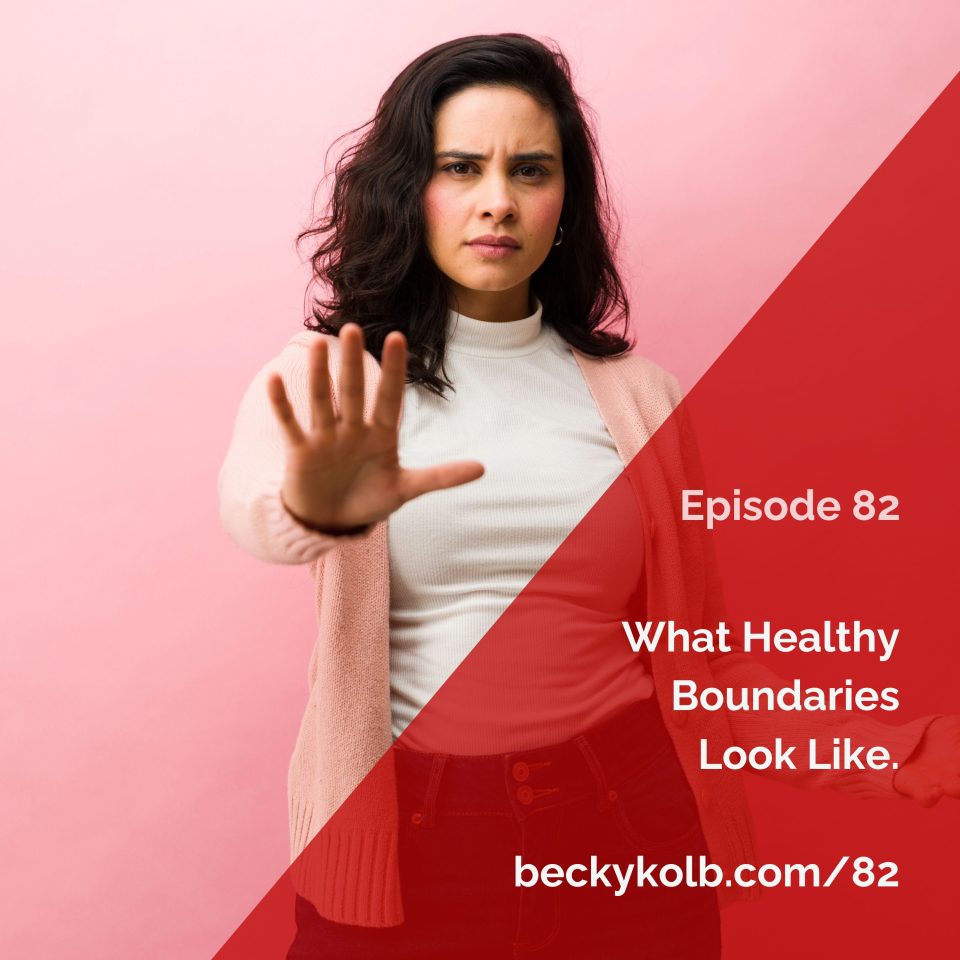
What are healthy boundaries? After all, you hear this phrase quite often these days. Especially between estranged parents and their kids. But what does the term mean?
They are healthy limits you set to protect your emotional, physical, and spiritual wellbeing as well as your time. It’s not about controlling others, which if you’ve listened to me long enough, you’ve heard me say a hundred times you cannot control anyone but you.
It is about deciding what you will accept in a relationship and choosing how you will respond to protect your peace, mental wellbeing, and your precious time. Today I’ll share some tips on establishing what healthy boundaries look like.
Why is it Necessary to Establish Boundaries
I’ve read some articles from people that feel setting boundaries is unnecessary. And it can be if it’s used to avoid difficult but necessary conversations or to control or punish someone. Healthy boundaries are not about burning bridges but about building bridges.
Creating distance isn’t the purpose of healthy boundaries. Rather, they are to help determine what is and is not okay in the relationship. They help build trust, safety, and respect.
People will treat you as you allow them. When you establish healthy boundaries, you’re letting the other person know to treat you with the respect you deserve. And of course, that goes both ways. You’ll need to abide by the healthy boundaries as well.
What Healthy Boundaries Look Like
Have you ever been out and heard a spouse berate their partner in public? The same can occur between a mother and her adult children. You can see humiliation in her face and body language. You wonder if that person permits that in public, their private life must be much worse.
Now, I want to pause here and clearly state that if you are in danger in a relationship, you need to let someone know immediately. Call 911 or get yourself to a place of safety. Do not hesitate or feel you deserve to be treated badly.
I am speaking to women who are not in danger but need to consider what healthy boundaries look like in their estrangement with adult kids.
Here are some attributes of healthy boundaries.
- Emotional safety keeps you from being overwhelmed by another’s problems. When your child comes to you with the same issues and refuses to do anything to correct the problem, recognize that emotionally you must learn to establish a boundary.
- Preventing burnout – you simply cannot put your needs last to take care of everyone else. Your mental and physical health are important to you and the wellbeing of others.
- Managing time and space – often others will consume your time and energy with issues that never seem to resolve. You must learn to manage the time and space allotted to you so that you can rest and have the energy for your other responsibilities.
- Improving the relationship – the goal of the healthy boundaries is to teach people how to respect and treat you and it builds trust and deepens the relationship over time.
Examples of Healthy Boundaries
I’ll share some basic healthy boundaries, and you’ll need to think through your specific situation to produce your own. In most every case, disrespect is a repeated violation that needs a boundary.
- Disrespect will not be tolerated. (yelling, screaming, name calling, interrupting, and talking over one another, condescending tone, making unreasonable demands, etc.)
- Disagreement is okay, disrespect is not.
- Agree to use “I feel” language rather than “you always”. For example, I feel you don’t listen to me when I’ve told you how I feel about (fill in the blank).
- Respect time commitments. Chronic lateness or not showing up will not be tolerated.
- Stonewalling or storming away from a conversation is not okay. We can agree to take a break or continue at a later time, but refusing to talk or storming out is not going to be acceptable.
These are just a few ideas to help you know what healthy boundaries look like. Remember you’re protecting your wellbeing and not attempting to control or punish someone else. It may be helpful to think of your adult kid as a co-worker or someone other than a relative in order to prevent that mother/child authority in this situation.
Communicating your Healthy Boundaries
When communicating what healthy boundaries look like to your adult kid, it’s important to be clear and respectful. Reiterate your love and respect for them and let them know the boundaries are to protect your wellbeing and theirs.
Acknowledge the estrangement or the relationship as it stands presently and remind them that you hope that it can be healed and reconciled. And doing that will require some healthy boundaries that you’ll communicate. Invite them to think about and share their healthy boundaries with you if they feel the need to do so.
You’re trying to build mutual respect and a healthy environment going forward that will lead to reconciliation and restoration.
- Select a time when neither of you are angry and upset. Timing can be everything and in a heated exchange is not a suitable time to lay out boundaries no matter how healthy they may seem.
- Remember to use “I” statements in a calm and clear manner. I refuse to accept disrespectful behavior toward me. Examples include mocking, yelling, name calling.
- Remind them that the boundaries are for both of you and an effort to build mutual respect so that you can have productive conversations.
- Be clear on next steps if a boundary is crossed. What happens next? This is a critical component of establishing healthy boundaries and you will need to be clear on the consequence if violated. Will you give one warning and then end the conversation? What will future conversations look like in light of this violation? Think about this one and follow through.
The Goal of Healthy Boundaries
Establishing healthy boundaries is for your wellbeing and to let others know how to treat you. It’s also a strategy for building strong and healthy relationships. Therefore, keep from being to rigid. You aren’t trying to keep people at a distance but rather keep them respectful as you work toward resolution.
Conversely, weak boundaries or not following through on holding someone accountable to them make you appear weak and unwilling to respect yourself. Women may feel fear of rejection if they set boundaries but let me ask this. Do you fear losing yourself? That’s what happens when you allow people to treat you with disrespect.
Until next time, remember setting healthy boundaries isn’t about controlling or punishing someone else. It’s about protecting your heart and mind. Teaching others what is ok and what is not okay in the relationship with you. And, that my friend is a healthy endeavor.
Give thought to the healthy boundaries that you want to establish.
Write them down, pray about them and seek God’s timing in communicating them to your loved one.
You are a wonderful woman who deserves to be treated with respect. My prayer is that you will have courage to communicate clear and healthy boundaries where needed in your estranged relationship.