
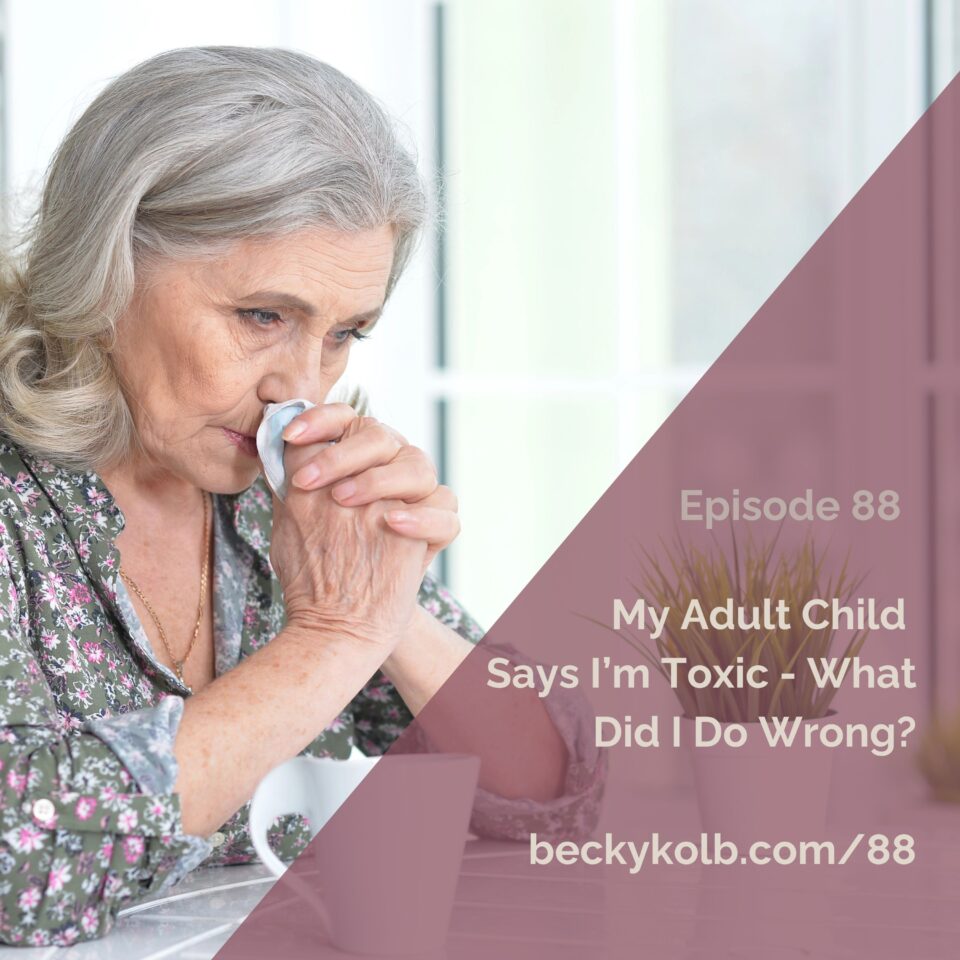
Imagine hearing your own child describe you as toxic. Maybe they say you were controlling, didn’t respect their boundaries, or caused them emotional pain. You look back at the years you spent raising them and wonder, how can we remember the same relationship differently?
I don’t know about you, but when I hear the word toxic, I think of the skull and bones image as a warning to stay away from something poisonous or destructive. And you know that doesn’t describe you accurately. Therefore, the emotional pain is multiplied as you suffer their label and mourn the loss of your loved one.
In today’s episode, we’ll talk more about the pain behind the accusation and different perspectives and I’ll share three questions to help you view your relationship with greater clarity, compassion, and honesty.
My Adult Child Says I’m Toxic – The Pain Behind the Accusation
Few things hurt more than hearing your adult child describe you as toxic. It’s a label that is often spoken by estranged adult kids who rarely understand the true meaning much less how deeply they’ve hurt you.
In my own estrangement journey, that label shook my confidence and identity as a mother. Certainly, I made mistakes, but toxic? That one cut to the core.
My friend please do not attempt to dismiss the pain this causes with you. Acknowledge it. Don’t believe it but do acknowledge that you are reeling from the pain of being called a toxic mother.
Intention Versus Impact
Adult estranged kids today tend to throw around that word – toxic -without understanding the meaning or the impact when it lands on their mother. A child may have reacted to something you did that was intended to be helpful. However, they viewed it as controlling or stepping over their boundaries.
A mom will go to her grave worrying about and loving her child. Sometimes, you offer advice that was unsolicited, intending it as a loving gesture. They perceived it as interfering in their life.
An example in my journey was a reaction to an intense argument my son and his wife were having on the phone. He was visiting and she was at home. Overhearing some of the conversation, I regrettably interjected myself into the situation naturally standing up for my son.
Imagine how that one ended. I intended it as a loving protection for my son. He didn’t ask for it nor did he want my involvement. Eventually, we cleared that one up, but you can see how something you might say or do is intended as love but rejected and taken otherwise.
Explore Different Perspectives
When my adult child says I’m toxic, my perspective is not a healthy one. I’ll bet yours isn’t either. What if we could step back and explore differing perspectives on what that means?
Rarely do we consider another’s perspective when they’ve hurled a label at us such as toxic. I’m asking you today to set that label aside. You’ve acknowledged the pain and considered the impact.
Allow yourself to step into the shoes of your adult child and explore what they might have been thinking when it was said. What could their view have been?
Outside influence may have contributed such as a spouse or significant other. I’m not saying you have to accept it but just consider the perspectives and why they may have behaved as they did.
Opening your mind to another’s thought process allows you to release some of the anger and emotional pain so you can gain more clarity in healing and working through the estrangement.
Defensiveness When My Adult Child Says I’m Toxic
If you’re like me, the first line of defense when your child says you’re toxic is anger. Remembering all the good things you’ve done for your child you’re aghast at how they could say you’re a toxic mom. Sit with the anger long enough and you’ll see it’s deep emotional pain – a hurt that goes to the core of who you are.
Defensiveness is a natural human reaction when we are accused and especially if it’s a false accusation. Go back to those perspectives. There’s a reason you and your adult child see things so differently.
Looking at the situation from the mom’s perspective, you see all the things that went into rearing this child. Love, protection, sacrifice. And this is the thanks you get in return?
Your son or daughter will see it from a distinct perspective – one you don’t know because they haven’t shared it with you. Alternatively, they may have tried to tell you, but you rejected their view and they pulled away and now claim you’re toxic.
Resist the defense statements and once you’ve reclaimed some peace and calmness, explore by asking questions if they will allow you to do so. Make attempts to understand from their perspective – whether or not they are accurate. Listen. Hear them out.
Distinguishing Responsibility from Self-Blame
Remember my story of interjecting myself into my son’s argument with his wife? I took responsibility for that action. Interfering in their business was not a wise decision even if my intent was good and loving. Making amends, the two eventually forgave and we moved on.
What if you are unaware of any boundaries you’ve crossed with your adult son or daughter? They’ve refused to tell you. Avoid self-blame. You can’t take responsibility for something you’re unaware you’ve done.
It’s hard to hear “my adult child says I’m toxic” yet you’re unaware of why they say it or feel that way. How do you manage that?
Allow yourself an allotted amount of time – 30 to 60 minutes. Sit with the situation and explore what was said as you explore different perspectives. You’re trying to determine any responsibility you may have had.
Once your time is up, take those thoughts and formulate an apology for what you’ve discovered could’ve been a contributing factor. Carefully craft the apology leaving out any defensive tone. Leave the door open so that if they want to talk further, you’re happy to sit, listen and make efforts to resolve things between you.
Then let it go. You’ve done all you can.
3 Reflective Questions
Toxic parenting is a tough topic because of the enormous amount of emotional pain associated with that label. Hopefully, the points I’ve covered today will help you settle, regain some calmness, and begin to look at this adult estranged child from an unfamiliar perspective.
Here are three questions to ponder:
What has my child actually told me? (not what I’ve interpreted)
Have I listened to understand or mainly to defend myself?
What might I acknowledge or change if reconciliation is a possibility and conversely if it isn’t?
You can love your child, recognize that you may have made mistakes and still believe you are worthy of love and respect – even if your child has said you’re a toxic mother.
If you’re struggling with an adult son or daughter who is estranged and may have called you toxic, I invite you to schedule a complimentary 30-minute conversation with me to see if together we can sort through confusion and decide how to move forward. You can do that at beckykolb.com/lets-talk
Until next time, hold your head high and allow your focus to drift to those relationships that bring joy and keep healing your own heart and finding the peace you deserve.